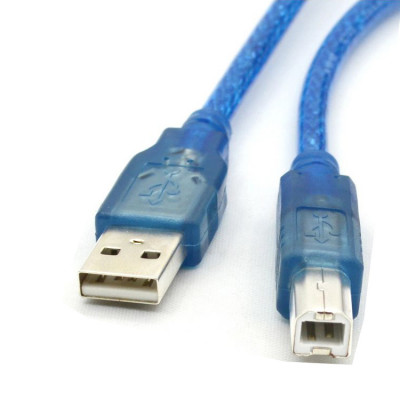
USB A To B Cable – Cable for Arduino – Blue Color
USB A To B Cable – Cable for Arduino – Blue Color
Related products
-
Arduino, Arduino Development Board's
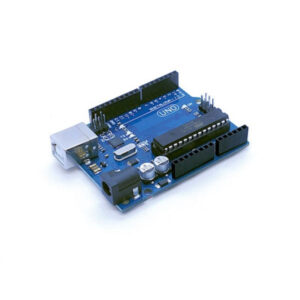
UNO R3 Development Board – Compatible Model High Quality
The Uno R3 is a open source microcontroller board based on the ATmega328 chip. This Board has 14 digital input/output pins, 6 analog input pins, Onboard 16 MHz ceramic resonator, Port for USB connection, Onboard DC power jack, An ICSP header and a microcontroller reset button. It contains everything needed to support the microcontroller. Using the board is also very easy, simply connect it to a computer with a USB cable or power it with DC adapter or battery to get started.
The Uno differs from all preceding boards in that it does not use the FTDI USB-to-serial driver chip. Instead, it features the Atmega16U2Atmega8U2 up to version R2) programmed as a USB-to-serial converter. While the UNO can be powered via the USB connection or with an external power supply, the power source is selected automatically.
External (non-USB) power can come either from an AC-to-DC adapter (wall-wart) or battery. The adapter can be connected by plugging a 2.1mm center-positive plug into the board’s power jack. Also leads from a battery can be inserted in the Gnd and Vin pin headers of the Power connector. The board can operate on an external supply of 6 to 20 volts. If supplied with less than 7V, however, the 5V pin may supply less than five volts and the board may be unstable. If using more than 12V, the voltage regulator may overheat and damage the board. The recommended range is 5v to 12v for Uno.
SKU: n/a -
Accessories, Arduino
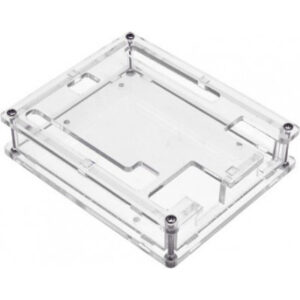
Transparent Acrylic Glossy Case Enclosure Box For Uno R3
Transparent Acrylic Glossy Case Enclosure Box For Uno R3 is of high-grade acrylic, which provides excellent protection. This is unique design provides easy connection to other components. The dimension of enclosure box is the same as original Uno R3.
SKU: n/a -
Arduino, Arduino Development Board's
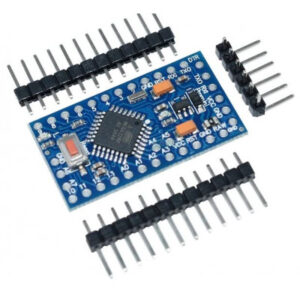
Pro Mini – ATMEGA 328P – 5V 16Mhz – Compatible Board
This is Pro Mini 5V/16MHz is a 5V running the 16MHz boot-loader. Pro Mini ATMEGA328P come without connectors.
It’s a great board that will get you up and running quickly. The Pro series is meant for users that understand the limitations of system voltage (5V), lack of connectors, and USB off board.
The Pro Mini is a micro-controller board base on the ATmega328. It has 14 digital input/output pins (of which 6 can be used as PWM outputs), 6 analog inputs, an on-board resonator, a reset button, and holes for mounting pin headers.
A six pin header can be connected to an FTDI cable to provide USB power and communication to the board. The Pro Mini is intended for semi-permanent installation in objects or exhibitions. The pin layout is compatible with the Mini.
SKU: n/a -
Arduino, Display
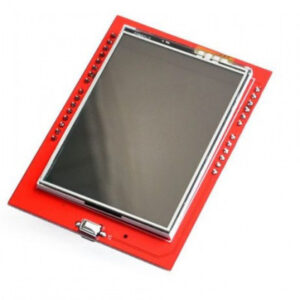
2.4 Inch Touch Screen TFT Display Shield for Arduino UNO Mega
2.4 Inch Touch Screen TFT Display Shield adds a touch up to your Arduino project with a beautiful large touchscreen display shield with built-in micro SD card connection. This TFT display is big (2.4 diagonal) bright and colorful! 240320 pixels with individual pixel control. It has way more resolution than a black and white 12864 display.
SKU: n/a